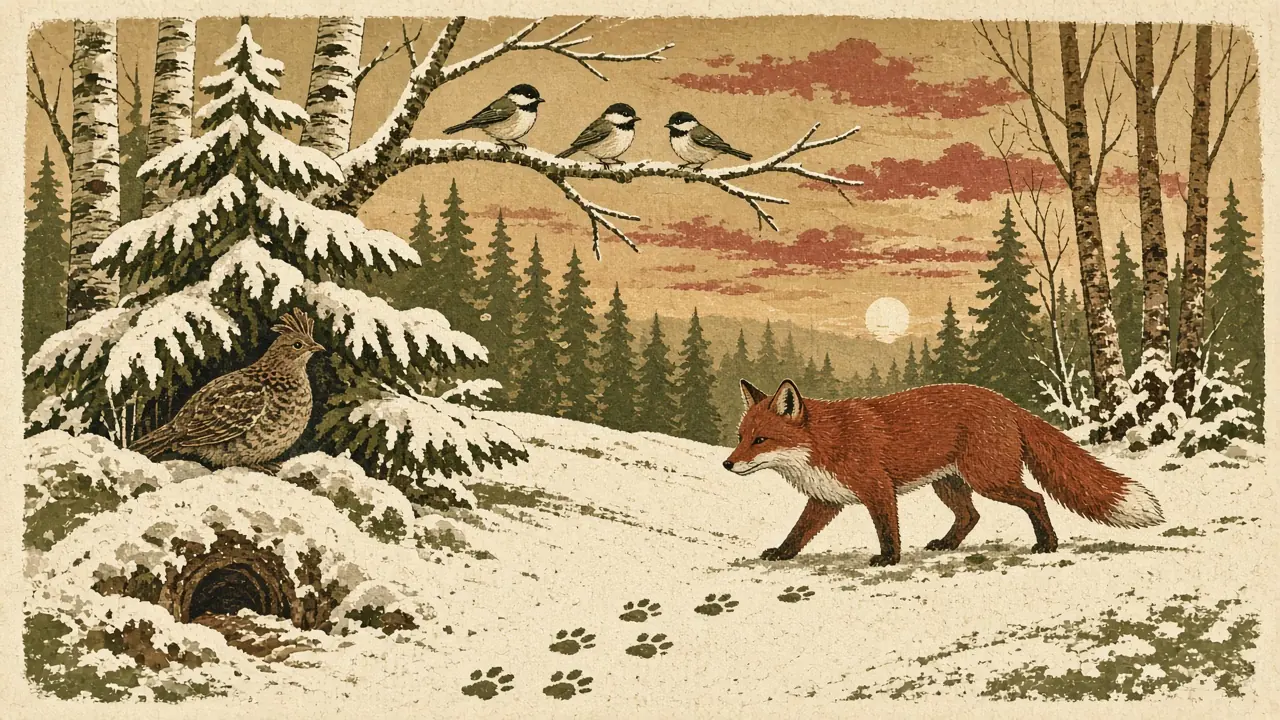
Hello, Trailhitters! This is your day, so up and away!
Today we are opening the archive. On December 15, 1947, boys and girls all over Wisconsin turned on their school radios for a program called Winter Ways. Together we went afield to see how the creatures of the woods get through the cold.
You can still hear that program today: press play below. Then let’s take another walk through it together.
Wisconsin School of the Air
Listen to the original broadcast: Winter Ways, Dec. 15, 1947
About 14 minutes · Hear all the original broadcasts on the Listen page
Every creature has a plan
Winter brings two troubles at once: cold, and not much to eat. Every creature has to solve both. Here is how I put it in the Field Guide that year:
“There is no more interesting study in the realm of nature than the ways nature provides her creatures to meet the cold and the scarcity of food in winter. The angleworm digs deep below the frost line; frogs bury themselves in the mud of the pond; insects rest in cocoons or other covering in protected corners; most birds, emblems of freedom, escape by flight; seeds slumber in frozen soil. Those that face the dangers and live off the land are given added keenness and hardiness and protective covering.”
From Winter Ways, Afield with Ranger Mac Field Guide 1947–48, Program 13, Dec. 15, 1947
Read that again slowly. It is a whole list of winter plans, one after another.
Dig down
The angleworm, which most of you call an earthworm, crawls deep into the ground, below where the frost can reach.
Bury in the mud
Many frogs spend the winter on or in the mud at the bottom of a pond, under the ice, where the water does not freeze solid.
Wrap up
Insects tuck themselves away in cocoons, under bark, or in some sheltered corner, and wait.
Fly away
Most of our birds simply leave. They fly south, where the food is.
Stay and face it
And then there are the brave ones that stay: the fox, the deer, the chickadee, the grouse. They live off the land all winter long. They have thick coats, sharp eyes and good noses, and they need every bit of them.
Sleepers, light and deep
Some animals sleep through the hard months. But not all winter sleep is the same. That year I asked you a riddle:
“What is the difference between the winter sleep of the chipmunk and the woodchuck?”
From Winter Ways, Afield with Ranger Mac Field Guide 1947–48, Program 13, Dec. 15, 1947
Think about it before you read on. Here is a hint: one of them packs a lunch, and one of them packs on fat.
Today we know
- The woodchuck is a true hibernator. It fattens up in fall, then sleeps in its burrow. Its body cools way down and its heart beats only a handful of times a minute.
- The chipmunk sleeps more lightly. It stores seeds and nuts in its burrow and wakes up every few days to eat a snack before dozing off again.
- Black bears are lighter sleepers than woodchucks. Their body temperature drops only a little, and they can wake up fairly easily. Even so, they can go all winter without eating or drinking.
- Wood frogs can freeze. Ice forms in their bodies and their hearts stop. Sugar in their cells protects them, and in spring they thaw out and hop away.
- Snow is a blanket. Fluffy snow holds a lot of air, so it keeps out the cold. Ruffed grouse sometimes dive into soft snow to spend the night, and mice tunnel safely underneath it.
Listen for yourself
You can hear the whole program, about 14 minutes long, in the player near the top of this page. It is also on our Listen page with the other original broadcasts. Look for Winter Ways, Dec. 15, 1947.
Your teacher, or you, can also read the Field Guide page for this program. It is in the 1947–48 Field Guide (PDF), under Program 13.
Your job this week
- For your scrapbook, make a list of the “Seven Sleepers”: seven animals that sleep away all or most of a Wisconsin winter.
- Draw or find a picture of each one. Write where it spends the winter and whether it is a deep sleeper or a light sleeper.
- Now name three animals or birds that stay awake all winter and must find their own food. After the next snow, go out and look for their tracks.
- Listen to Winter Ways on the Listen page and check your answers.
Winter is no time to stay indoors and wait. The woods are busy, if you know where to look.
I’ll be seeing you on the trail.
From the Archive: written in Ranger Mac’s voice by the rangermac.org team, from his Field Guide for Winter Ways (Program 13, Dec. 15, 1947). The quoted lines are from the Field Guide. The picture at the top is an illustration, not a photograph.
More from Ranger Mac
Afield With Ranger Mac
Find the pictures in the sky
By Ranger Mac
Read more about Find the pictures in the sky →
Afield With Ranger Mac
Don’t you believe it: nature’s tall tales
By Ranger Mac
Read more about Don’t you believe it: nature’s tall tales →
Afield With Ranger Mac
Come on, winter: find next year’s buds
By Ranger Mac
Read more about Come on, winter: find next year’s buds →Afield with Ranger Mac
Hear the original radio broadcasts
Listen to Ranger Mac on the Wisconsin School of the Air, or read his scripts and field guides.